

🚚 Free Shipping on Orders Over $150 Across Canada 🛡️ Research-Grade Peptides • Laboratory Tested • 99%+ Purity 🔒 Secure Checkout • Fast & Discreet Shipping 🚚 Free Shipping on Orders Over $150 Across Canada 🛡️ Research-Grade Peptides • Laboratory Tested • 99%+ Purity 🔒 Secure Checkout • Fast & Discreet Shipping
HPLC and MS in Peptide Verification
Learn how HPLC and mass spectrometry verify peptide identity, purity, and impurities, and why analytical limits matter in research laboratory workflows.

Compliance flag — do not publish without review.
These phrases appear in the draft and may breach the blog rules: may support
These phrases appear in the draft and may breach the blog rules: may support
How are peptides verified in research laboratories?
Peptide verification is the analytical process of checking whether a peptide sample is consistent with its expected chemical identity and whether detectable impurities are present. In research settings, two of the most common tools are high-performance liquid chromatography, often abbreviated HPLC, and mass spectrometry, often abbreviated MS.
HPLC primarily separates peptide-related components, while MS measures mass-to-charge values that help confirm molecular mass and, in some workflows, sequence-related information. These methods address analytical identity and composition; they do not establish biological activity, clinical usefulness, safety, or suitability for human use.
Evidence level: the claims in this article concern analytical chemistry, method validation, and laboratory quality assessment. They are not in vitro, animal, observational human, controlled human trial, or established authorised clinical-use claims about health outcomes.
Research Notice
This article discusses published scientific research. It is provided for educational purposes only and does not provide medical advice, dosing, administration or human-use instructions.
1. HPLC purity analysis and chromatographic separation
HPLC separates molecules as they pass through a stationary phase and a liquid mobile phase. For peptides, reversed-phase HPLC is widely used because many peptides can be separated by differences in hydrophobicity, charge distribution, and interaction with a C18 or related column chemistry.
Evidence level: this is established analytical practice described in compendial and regulatory sources such as USP general chapter 621, ICH Q2(R2), and ICH Q14. It is not biological evidence from in vitro, animal, observational human, controlled human, or authorised clinical-use studies.
In a typical peptide HPLC method, a gradient moves from a more aqueous mobile phase to a higher proportion of organic solvent. Peptide components elute at different retention times, creating chromatographic peaks that can be compared with a reference standard or method expectation when such a standard is available.
Purity by HPLC is often reported as relative peak area percentage. This means the area of the main peak is compared with the total area of detected peaks under the selected chromatographic and detection conditions.
Evidence level: relative peak area reporting is an analytical calculation used in method validation and quality control. It is not evidence that a material has any biological, therapeutic, or clinical property.
Researchers should interpret HPLC purity with caution because it is method-dependent. A peptide-related impurity that does not absorb strongly at the chosen UV wavelength, co-elutes with the main peak, or falls outside the detection window may be underestimated or missed.
For that reason, HPLC is strongest when its method parameters are documented. Important details include column type, mobile phases, gradient profile, flow rate, detection wavelength, injection volume, sample solvent, temperature, and integration criteria.
System suitability is also central to reliable HPLC interpretation. Parameters such as retention time repeatability, peak resolution, tailing factor, theoretical plates, and signal-to-noise ratio help determine whether a chromatographic run is adequate for its intended analytical purpose.
Evidence level: system suitability principles are described in analytical validation guidance and compendial chapters. They are laboratory performance criteria rather than in vitro, animal, observational human, controlled human, or authorised clinical-use evidence.
Peptides may undergo changes during synthesis, cleavage, purification, storage, or sample preparation. Analytical laboratories commonly monitor for deletion sequences, truncated peptides, oxidation products, deamidation products, salt forms, counterions, and residual synthesis-related materials when the method is designed to detect them.
HPLC alone may not identify the chemical nature of each peak. A chromatogram can show that multiple detectable components are present, but additional information is usually needed to assign molecular identities to those peaks.
2. Mass spectrometry identity confirmation and impurity assignment
Mass spectrometry helps verify peptide identity by measuring ions derived from the molecule. Electrospray ionization and matrix-assisted laser desorption ionization are two commonly used ionization approaches in peptide analysis.
Evidence level: this is established analytical chemistry practice described in peer-reviewed mass spectrometry literature, instrument manufacturer technical documentation, and laboratory validation guidance. It is not in vitro, animal, observational human, controlled human, or authorised clinical-use evidence.
For many peptides, MS can confirm whether the observed molecular mass is consistent with the theoretical monoisotopic or average mass calculated from the sequence. In electrospray MS, peptides often appear as multiple charge states, and software can deconvolute the charge envelope to estimate the neutral molecular mass.
High-resolution instruments can provide accurate mass measurements that improve confidence in molecular formula or sequence consistency. However, an accurate mass match is not always unique because different chemical species can share very similar masses.
Evidence level: accurate mass interpretation is an analytical inference supported by instrument calibration, mass accuracy specifications, and method validation. It does not establish any health-related property of a peptide sample.
Tandem mass spectrometry, or MS/MS, can fragment peptide ions to produce sequence-informative product ions. Fragment ion series, commonly described as b and y ions in peptide interpretation, may support confirmation of parts of the expected amino acid sequence.
MS/MS has important limitations. It may not fully distinguish leucine from isoleucine, may provide incomplete sequence coverage, and may not directly confirm stereochemistry unless specialized methods are used.
Coupling HPLC with MS is especially useful because chromatographic retention time and mass information are collected together. LC-MS can help assign impurity peaks, distinguish co-eluting species when the mass spectra differ, and detect mass shifts associated with oxidation, hydrolysis, or other modifications.
Evidence level: LC-MS impurity profiling is supported by analytical method development and validation studies in peer-reviewed journals such as Analytical Chemistry, Journal of Chromatography A, and Rapid Communications in Mass Spectrometry. It remains an analytical characterization approach, not a biological evidence category.
Ionization efficiency is a major limitation in MS. Two peptide-related compounds present at the same concentration may produce different signal intensities, so MS peak abundance should not automatically be treated as an absolute concentration unless the method is validated for quantitative use.
Salts, nonvolatile buffers, detergents, and sample matrix components can also suppress ionization. Laboratories often choose volatile mobile phase additives for LC-MS workflows because they are more compatible with electrospray ionization than many traditional chromatographic buffers.
Reliable peptide verification is strongest when HPLC and MS results are interpreted together. HPLC provides separation and relative peak information, while MS adds molecular mass and structural evidence, but neither method by itself proves biological activity or suitability for any human application.
What Does the Research Show?
The analytical literature and recognized validation guidance support the use of HPLC and MS as complementary tools for peptide verification. The evidence base is strong for analytical identity, separation, and impurity assessment when validated methods and appropriate reference materials are used.
- HPLC evidence level: analytical method validation and compendial guidance support its use for separation, retention time comparison, and relative purity estimation; this is not in vitro, animal, observational human, controlled human, or authorised clinical-use evidence.
- MS evidence level: analytical validation and peer-reviewed mass spectrometry research support molecular mass confirmation and impurity assignment; this does not establish safety, effectiveness, or biological function.
- LC-MS evidence level: combined chromatographic and mass-based workflows provide stronger characterization than either technique alone, but results remain dependent on method design, calibration, sample handling, and data interpretation.
- Regulatory context: ICH Q2(R2), ICH Q14, USP 621, and USP 1225 describe principles relevant to analytical procedure validation, but a certificate of analysis does not determine the legal status, permitted use, or human-use suitability of a research material in Canada.
Researchers reviewing peptide analytical data should look beyond a single purity number. A more complete review considers chromatograms, mass spectra, method conditions, acceptance criteria, reference standards, instrument calibration, and whether the reported method is fit for its stated research purpose.
It is also important to distinguish published research about a molecule from data about a specific supplied material. A scientific paper on a peptide sequence does not verify the identity, purity, storage history, or performance of any commercial research product.
Related Research Product
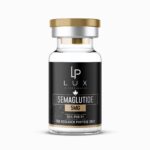
Lux Peptides lists Semaglutide among its research products; this mention is limited to analytical verification context and does not describe human use or product performance.
Educational Disclaimer
This article is provided for scientific and educational purposes only. It does not describe or imply the safety, effectiveness or intended use of any Lux Peptides product.Nothing in this article is intended to diagnose, treat, cure or prevent disease or provide instructions for human use.