

🚚 Free Shipping on Orders Over $150 Across Canada 🛡️ Research-Grade Peptides • Laboratory Tested • 99%+ Purity 🔒 Secure Checkout • Fast & Discreet Shipping 🚚 Free Shipping on Orders Over $150 Across Canada 🛡️ Research-Grade Peptides • Laboratory Tested • 99%+ Purity 🔒 Secure Checkout • Fast & Discreet Shipping
What Is Cardiogen? The AEDR Bioregulator Peptide Explained
Cardiogen research explained: the AEDR sequence, cardiomyocyte studies, preliminary findings and evidence limitations.

Cardiogen differs from Epitalon by a single residue, yet the two are studied in completely different tissues. That is the central claim of the short-bioregulator literature, and it is worth examining carefully.
Quick facts
| Property | Detail |
|---|---|
| Sequence | Ala-Glu-Asp-Arg (AEDR) |
| Length | 4 amino acids |
| Family | Khavinson short peptide bioregulators |
| Research field | Cardiomyocyte gene expression |
One residue apart
Epitalon is AEDG; Cardiogen is AEDR, with arginine replacing glycine. Arginine is large and positively charged where glycine has no side chain at all, and in the proposed DNA-binding model that difference changes which sequences the peptide can recognise. Whether such small peptides really achieve sequence-specific DNA binding in cells remains an open question.
What research reports
Published work from this group describes changes in gene and protein expression in cardiac tissue models, with the peptide studied as a regulator of cardiomyocyte differentiation markers. The evidence base is narrow and largely from the originating laboratories.
What laboratories study it for
Cardiomyocyte culture and gene-expression profiling, peptide-DNA interaction studies, and comparative work across the tetrapeptide family.
Laboratory documentation and handling
Storage and handling requirements depend on the material, batch and analytical method. Consult the current product label, certificate of analysis and your laboratory’s validated procedures. Appearance alone does not establish identity, purity or stability.
Frequently asked questions
Why is it associated with cardiac research?
That is the tissue the originating studies focused on.
How robust is the evidence?
Limited and largely from one research tradition.
Related research material
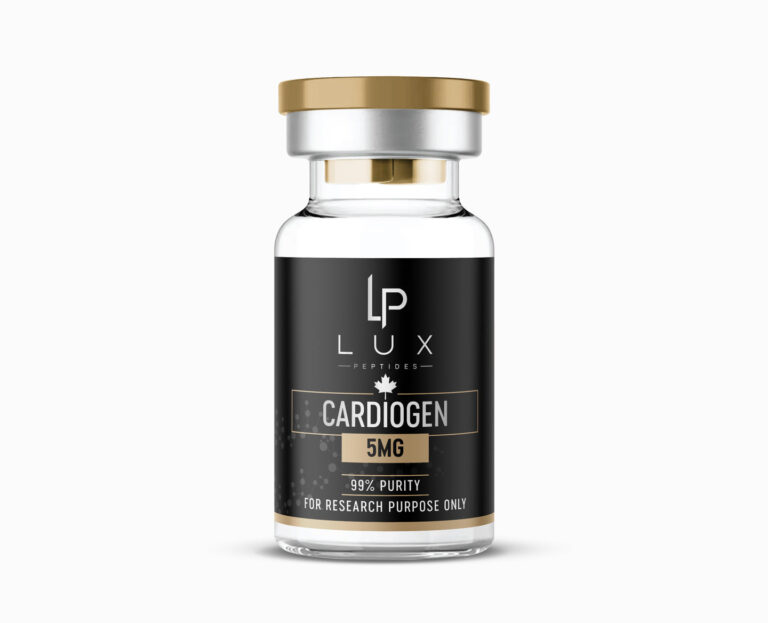
View Cardiogen at Lux Peptides for the current product description and available research formats.
For laboratory research use only. Not for human or veterinary use. Not approved by Health Canada for any therapeutic purpose.