


🚚 Free shipping on $150+ 🛡️ Research-Grade Peptides • Laboratory Tested • 99%+ Purity 🔒 Secure Checkout • Fast & Discreet Shipping 🚚 Free shipping on $150+ 🛡️ Research-Grade Peptides • Laboratory Tested • 99%+ Purity 🔒 Secure Checkout • Fast & Discreet Shipping
What Is Epitalon? The Four-Residue Peptide in Telomerase Research
Epitalon research explained: the AEDG tetrapeptide, preliminary telomerase findings, evidence limitations and laboratory documentation.

Epitalon is a four-amino-acid peptide studied in the short-peptide bioregulator literature. Its research history explains the interest in this small molecule and the need to distinguish preliminary observations from independently replicated findings.
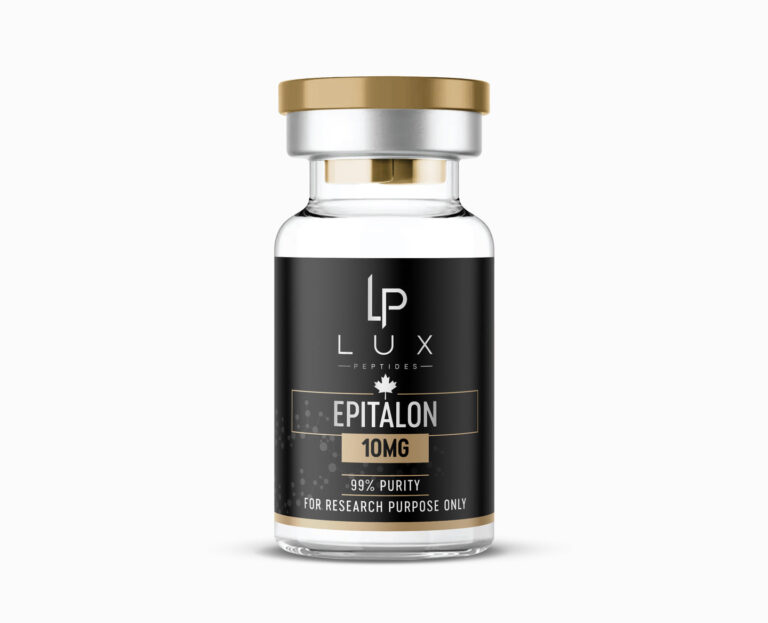
Quick facts
| Property | Detail |
|---|---|
| Sequence | Ala-Glu-Asp-Gly (AEDG) |
| Length | 4 amino acids |
| Also called | Epithalon, epithalamin peptide |
| Origin | Synthetic analogue of a pineal extract fraction |
| CAS number | 307297-39-8 |
Where it came from
Soviet-era research on pineal gland extracts produced a preparation called epithalamin. Work by Vladimir Khavinson’s group identified a short active sequence within it, and Epitalon is the synthetic tetrapeptide version. It is the best known of a family of short “bioregulator” peptides that includes Pinealon, Cardiogen and Cartalax.
Proposed mechanism
The central claim in this literature is that very short peptides can enter the nucleus and interact directly with DNA, binding in the minor groove at specific sequences and influencing transcription. Reported outcomes include changes in telomerase (TERT) expression in cell culture and effects on chromatin structure. Much of this work comes from a small number of groups and independent replication is limited, so results should be treated as preliminary.
What laboratories study it for
Telomerase expression assays, telomere length measurement in culture, chromatin and gene-expression studies, and peptide-DNA binding chemistry.
Laboratory documentation and handling
Storage and handling requirements depend on the material, batch and analytical method. Consult the current product label, certificate of analysis and your laboratory’s validated procedures. Appearance alone does not establish identity, purity or stability.
Frequently asked questions
What is a Khavinson peptide?
One of a family of very short peptides proposed to act on gene expression directly.
How strong is the evidence?
Mostly from a limited set of groups; treat it as early-stage research.
Related research material
View Epitalon at Lux Peptides for the current product description and available research formats.
For laboratory research use only. Not for human or veterinary use. Not approved by Health Canada for any therapeutic purpose.
