

🚚 Free Shipping on Orders Over $150 Across Canada 🛡️ Research-Grade Peptides • Laboratory Tested • 99%+ Purity 🔒 Secure Checkout • Fast & Discreet Shipping 🚚 Free Shipping on Orders Over $150 Across Canada 🛡️ Research-Grade Peptides • Laboratory Tested • 99%+ Purity 🔒 Secure Checkout • Fast & Discreet Shipping
99% Peptide Purity in Research Sourcing
Learn what 99% peptide purity means, how HPLC and mass spectrometry measure it, and what researchers should verify when reviewing a peptide COA for sourcing.

What does 99% peptide purity mean?
99% peptide purity usually means that, under a specified analytical method, the main peptide peak represents about 99% of the total detected chromatographic peak area. In research peptide sourcing, this is most often reported from reverse-phase high-performance liquid chromatography, abbreviated as RP-HPLC.
This number does not automatically mean that 99% of the total vial mass is the target peptide. Water, counterions, salts, residual solvents, and non-UV-detecting materials may contribute to mass but may not be counted in a standard HPLC area-percent purity result.
For researchers and laboratory professionals, the practical question is not only whether a supplier states 99% purity, but how that value was measured, what impurities were detectable, and whether the certificate of analysis, or COA, contains enough batch-specific information to evaluate suitability for a defined research protocol.
Research Notice
This article discusses published scientific research. It is provided for educational purposes only and does not provide medical advice, dosing, administration or human-use instructions.
1. What 99% peptide purity includes and excludes
In peptide chemistry, purity is commonly a measure of relative chemical composition within a detectable analytical window. A 99% HPLC purity result indicates that the target peptide accounted for approximately 99% of the integrated peak area in that chromatogram, using that wavelength, column, mobile phase, gradient, and integration method.
The remaining 1% may include deletion sequences, truncated peptides, incomplete deprotection products, oxidation products, deamidated forms, racemized residues, dimers, hydrolysis products, or closely related synthetic by-products. The exact impurity profile depends on peptide length, sequence, protecting groups, synthesis conditions, cleavage chemistry, purification method, and storage conditions.
Purity should not be confused with identity. Identity asks whether the material has the expected molecular structure, while purity asks how much of the detected material appears to be the intended peptide relative to detectable impurities. A material can show a high main HPLC peak and still require mass confirmation to support identity.
Purity also differs from assay or content. Assay attempts to quantify how much target peptide is present by mass or molar amount, often accounting for peptide content, counterion form, water content, and salts. HPLC area purity alone is not a complete assay value.
Lyophilized peptides often contain non-peptide components such as trifluoroacetate, acetate, chloride, sodium salts, buffer residues, or water. These may be present because of purification and lyophilization processes. Depending on the analytical method, they may be outside the UV chromatogram used for purity reporting.
For this reason, a 99% purity statement should be read as a method-dependent analytical result, not as a universal statement about total composition. Researchers comparing vendors or batches should look for the actual chromatogram, integration parameters, molecular mass confirmation, lot number, test date, and method conditions rather than relying only on a summary label.
2. How HPLC and mass spectrometry measure peptide purity
RP-HPLC is the most common method used to estimate research peptide purity. It separates peptide-related species based on interactions with a hydrophobic stationary phase and an aqueous-organic mobile phase, usually with an acid modifier. Peptides elute at different retention times depending on hydrophobicity, charge state, conformation, and sequence.
Most routine peptide HPLC reports use UV detection, often near 214 nm, where the peptide backbone absorbs strongly. If the target peptide peak accounts for 99% of the total integrated UV peak area, the report may state 99% purity. This is an area-normalization result, not a direct weight-percent result.
HPLC purity depends on method resolution. Two impurities that co-elute with the main peak may not be distinguished, and a shallow gradient, overloaded injection, inappropriate wavelength, or poor integration can change the apparent purity. A strong COA should therefore include enough method detail for a qualified reviewer to understand the basis of the result.
UPLC, or ultra-performance liquid chromatography, uses smaller particles and higher pressures than traditional HPLC, often improving resolution and speed. It is not automatically more accurate in every case, but a well-developed UPLC method can reveal impurities that a less resolving method may miss.
Mass spectrometry, often reported as MS, ESI-MS, MALDI-TOF MS, or LC-MS, supports peptide identity by comparing the measured molecular mass with the expected mass. For peptides, mass spectra may show multiple charge states, adducts, or isotope patterns. A close mass match is useful identity evidence but does not, by itself, prove 99% purity.
LC-MS combines chromatographic separation with mass detection and can help assign impurity peaks. It is especially useful when a laboratory needs to distinguish related variants such as oxidation, deamidation, truncation, or adduct formation. Quantification by LC-MS requires validation because ionization efficiency can vary among compounds.
Other tests may be relevant depending on the research use. Amino acid analysis can support peptide content or composition. Karl Fischer titration can measure water. Ion chromatography may evaluate counterions. Residual solvent testing, elemental analysis, microbial limits, sterility, or endotoxin testing may be relevant for certain laboratory contexts, but these are separate from the HPLC purity percentage.
Researchers should also consider stability. Some peptides are sensitive to oxidation, repeated freeze-thaw exposure, moisture, light, or pH. A purity value reflects the tested sample at a point in time under specified conditions and should not be assumed to remain unchanged under all storage or handling conditions.
What Does the Research Show?
The evidence relevant to 99% peptide purity is primarily analytical-method evidence from peptide chemistry, chromatography, mass spectrometry, and quality-control practice. It is not evidence of biological activity, safety, therapeutic effect, or human performance of any research-grade material.
- Analytical-method evidence: Peer-reviewed analytical chemistry and established laboratory practice support RP-HPLC or UPLC with UV detection as a standard way to estimate relative peptide purity when methods are suitable and adequately resolved.
- Identity evidence: Mass spectrometry provides molecular mass confirmation and can help characterize related impurities, but MS confirmation is not the same as a quantitative purity assay.
- Content evidence: Assay, water content, counterion analysis, and residual solvent tests address questions that HPLC area purity may not answer.
- In vitro evidence: Cell-based studies may evaluate biological activity of a molecule in controlled systems, but they do not establish the purity, composition, or suitability of a specific supplier batch.
- Animal evidence: Animal studies may investigate biological mechanisms or pharmacology of a molecule, but they do not verify a commercial research peptide lot unless that exact lot was analytically tested and reported.
- Observational human evidence and controlled human trials: Human research addresses clinical or physiological questions under defined protocols and cannot be used to infer the purity, identity, safety, or equivalence of a research-grade supplier product.
- Established authorised clinical use: Regulatory approval of a medicine, where applicable, concerns a specific authorised product made under regulated conditions. It should not be extrapolated to a research-grade peptide with the same molecule name.
When evaluating a COA, researchers commonly look for a batch or lot number, test date, stated method, chromatogram, retention time, peak integration, reported purity, expected and observed mass, and any additional tests relevant to the planned research. A COA without method detail may still be informative, but it is harder to interpret scientifically.
It is also useful to ask whether purity is reported on an anhydrous, salt-free, or as-is basis. These distinctions affect mass calculations in analytical work. For quantitative experiments, peptide content may matter as much as chromatographic purity.
Finally, 99% purity should be viewed as a specification within a broader quality assessment. It does not imply sterility, absence of endotoxin, absence of all trace contaminants, suitability for any human use, or equivalence to a regulated pharmaceutical product. Research-use labels do not remove applicable Canadian regulatory requirements or institutional responsibilities.
Related Research Product
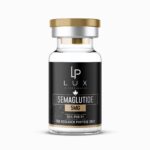
The Lux Peptides catalog includes Semaglutide as a research product listing where researchers may review product-specific information separately from general analytical concepts.
Sources and further reading
- ICH Q2(R2) — validation of analytical procedures — Official analytical guidance; 2023 guideline with 2025 corrections.
- ICH Q14 — analytical procedure development — Official analytical guidance adopted in 2023.
Educational Disclaimer
This article is provided for scientific and educational purposes only. It does not describe or imply the safety, effectiveness or intended use of any Lux Peptides product.Nothing in this article is intended to diagnose, treat, cure or prevent disease or provide instructions for human use.