

🚚 Free Shipping on Orders Over $150 Across Canada 🛡️ Research-Grade Peptides • Laboratory Tested • 99%+ Purity 🔒 Secure Checkout • Fast & Discreet Shipping 🚚 Free Shipping on Orders Over $150 Across Canada 🛡️ Research-Grade Peptides • Laboratory Tested • 99%+ Purity 🔒 Secure Checkout • Fast & Discreet Shipping
BPC-157 and TB-500 Together: Why Labs Study This Two-Peptide Blend
Explore BPC-157 and TB-500 blend research, the limits of comparing their mechanisms, and what analytical documentation should establish.

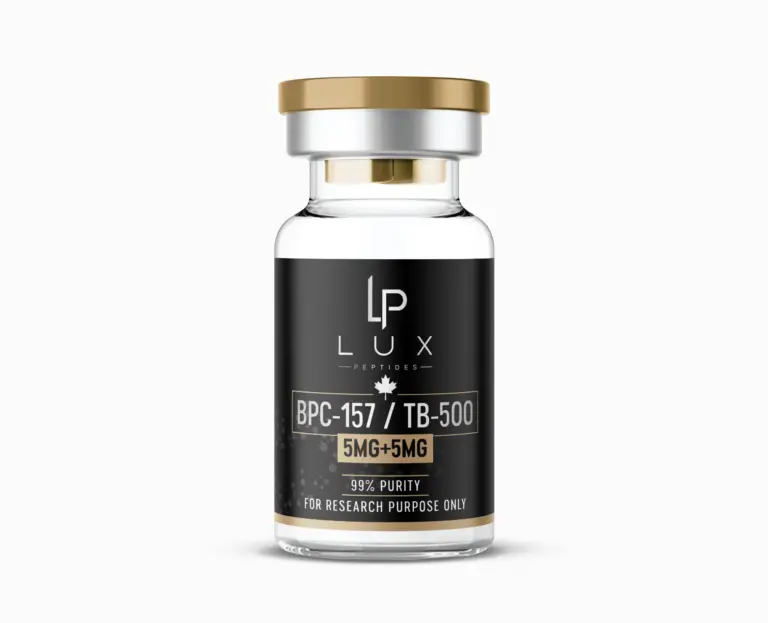
BPC-157 and TB-500 are discussed together in laboratory research because they originate from different peptide systems. Comparative research asks whether their associated signalling pathways overlap or interact. The identity of the TB-500 material and the evidence for each component must be established before interpreting a blend.
Quick facts
| Property | BPC-157 | TB-500 |
|---|---|---|
| Origin | Fragment of a gastric juice protein | Based on thymosin beta-4’s actin-binding region |
| Length | 15 residues | 7-residue core (LKKTETQ) or 43-residue full protein |
| Main research focus | Angiogenic and NO signalling, fibroblast outgrowth | Parent Tβ4 actin binding; fragment activity requires separate evidence |
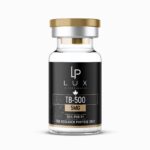
| Lux vial | Refer to the current product label and batch COA | Component identity must be confirmed |
Two mechanisms, one model
BPC-157 research has examined growth-factor and nitric oxide signalling in endothelial and fibroblast models. Full-length thymosin beta-4 research has examined actin binding and cell migration. Findings about the parent protein cannot automatically be attributed to a fragment sold as TB-500. The precise molecular identity and model determine which comparisons are meaningful.
Interpreting blend research
Results from a two-peptide blend cannot establish each component’s contribution without appropriate comparisons. Interpretation also depends on confirming the identity and composition of the material studied. Separate BPC-157 and TB-500 research materials provide distinct comparators.
Reading the COA for a blend
A blend certificate should provide analytical evidence for the identity and composition of both peptides. The analytical method must be suitable for distinguishing the components; a peak count alone does not establish identity or content. Compare the reported composition with the product label and batch documentation.
Laboratory documentation and handling
Storage and handling requirements depend on the batch and analytical method. Consult the product documentation, certificate of analysis and your laboratory’s validated procedures. Appearance alone does not establish identity, purity or stability.
Bacteriostatic water is listed in the Lux Peptides laboratory consumables catalogue. Its suitability depends on the requirements of the validated analytical method.
Frequently asked questions
Do BPC-157 and TB-500 interfere with each other in solution?
A blend’s composition and stability require product-specific analytical evidence. Solubility alone does not establish compatibility or confirm that both components remain intact.
Why buy a blend instead of two vials?
Convenience and consistent ratio. Separate vials are better when you need to vary each concentration.
Is the blend tested as one product?
It should be tested for both components; ask for the batch COA if it is not shown.
Related research material
View BPC-157 / TB-500 at Lux Peptides for the product description and available research formats.
For laboratory research use only. Not for human or veterinary use. Lux Peptides products are not drugs, health products or supplements and are not approved by Health Canada for any therapeutic purpose.