

🚚 Free Shipping on Orders Over $150 Across Canada 🛡️ Research-Grade Peptides • Laboratory Tested • 99%+ Purity 🔒 Secure Checkout • Fast & Discreet Shipping 🚚 Free Shipping on Orders Over $150 Across Canada 🛡️ Research-Grade Peptides • Laboratory Tested • 99%+ Purity 🔒 Secure Checkout • Fast & Discreet Shipping
How TB-500 Works: A Researcher’s Guide to Thymosin Beta-4 Fragments
What TB-500 means, how it relates to thymosin beta-4, and why molecular identity matters when interpreting cell migration research.

TB-500 research peptide is one of the most widely used names in peptide research, and it is loosely defined.
However, before ordering it, a lab should know exactly which molecule it refers to.
This guide clarifies that point and covers the biology behind it.
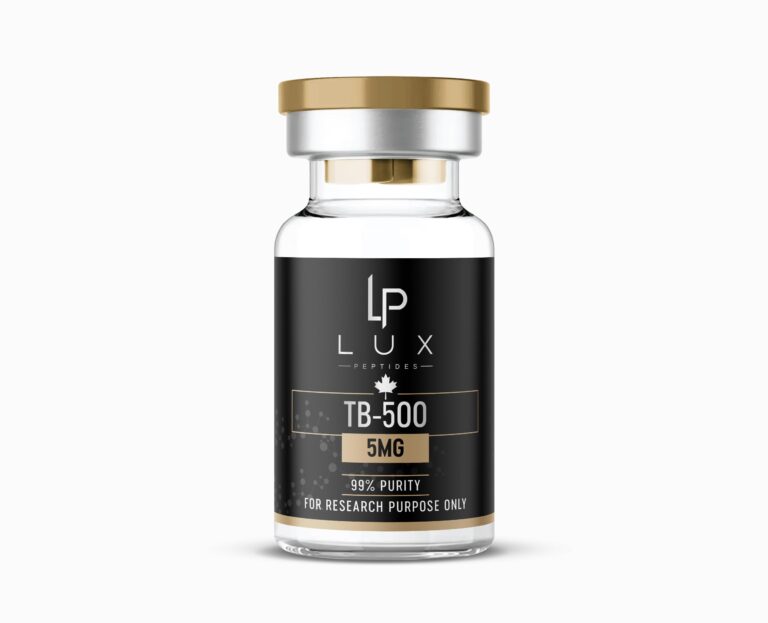
Quick facts
| Property | Detail |
|---|---|
| Parent protein | Thymosin beta-4 (Tβ4), 43 amino acids |
| Key active region | Residues 17–23, Leu-Lys-Lys-Thr-Glu-Thr-Gln (LKKTETQ) |
| Parent CAS number | 77591-33-4 (thymosin beta-4) |
| Primary binding partner | Monomeric G-actin |
| Form supplied | Lyophilised powder |
| Research area | Tissue repair signalling |
One name, two molecules
Thymosin beta-4 is a small, naturally occurring protein found in almost every human cell type. Its actin-binding activity is concentrated in a short central motif, LKKTETQ. The term TB-500 research peptide was coined for a synthetic peptide built around that region. In practice, some suppliers also use the name for full-length synthetic Tβ4. Always check the certificate of analysis: the measured mass tells you which version you have.
How it works at the molecular level
Tβ4 is the main G-actin sequestering protein in mammalian cells. By binding single actin units, it controls how quickly actin filaments assemble. Because filament turnover drives cell movement and shape change, this interaction links Tβ4 to TB-500 research peptide.
- Cell migration and lamellipodia formation in culture.
- Endothelial cell behaviour in angiogenesis assays.
- Signalling studies in cardiac and corneal tissue models.
What laboratories study it for TB-500 research peptide
Research involving thymosin beta-4 and fragments, including the TB-500 research peptide, includes actin polymerization, migration assays, and tissue models.
Thus, findings must be matched to the exact molecule tested; full-length protein results do not establish a fragment’s activity.
BPC-157 is another compound examined in comparative cellular-signalling research.
Laboratory documentation and handling
Storage and handling requirements depend on the batch and analytical method. Consult the product documentation, certificate of analysis and your laboratory’s validated procedures. Appearance alone does not establish identity, purity or stability.
Bacteriostatic water is listed in the Lux Peptides laboratory consumables catalogue. Its suitability depends on the requirements of the validated analytical method.
Frequently asked questions
Is TB-500 the same as thymosin beta-4?
Not strictly.
The TB-500 research peptide usually refers to a synthetic fragment based on Tβ4’s active region.
Sometimes the name is applied to the full protein.
Why does actin binding matter?
Actin filament turnover powers cell movement.
An actin-sequestering peptide is a useful tool for migration research.
How do I confirm which TB-500 I received?
Compare the molecular mass on your batch COA with the expected mass of the fragment. Or compare it to the full 43-residue protein.
Related research material
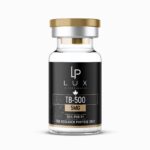
View TB-500 at Lux Peptides for the product description. It also covers available research formats.
For laboratory research use only.
Additionally, not for human or veterinary use.
Lux Peptides products are not drugs, health products, or supplements.
They are not approved by Health Canada for any therapeutic purpose.